The Best Financial Tool for African Freelancers and SMEs — Built for How Business Works in Africa
Africa has over 60 million registered SMEs. It has some of the fastest-growing entrepreneurial ecosystems in the world — Lagos, Nairobi, Accra, Cape Town, and Dakar are producing businesses at a rate that rivals any global city. And yet the financial tools available to those businesses are almost universally designed for Western markets, priced in dollars at Western purchasing power, and built around accounting workflows that do not reflect how most African SMEs actually operate.
This article is a direct look at what African SMEs need from a financial tool and why most available options fall short of that need.
What Makes African SME Financial Management Unique
Mixed employment structures
A typical SME in Lagos or Nairobi does not employ everyone on a standard monthly salary. The workforce often includes permanent staff, casual workers paid by the day, part-time staff paid by the hour, and contractors on project-based arrangements. Financial tools that only handle fixed monthly salaries cannot generate accurate payslips for this workforce.
Multi-currency reality
A significant portion of African SMEs earn in foreign currency — USD, EUR, or GBP from international clients — while spending in local currency. A financial tool that cannot handle multi-currency invoicing and local-currency expense tracking simultaneously is not fit for this reality.
VAT and PAYE complexity
Tax compliance in Africa varies significantly by country but almost universally involves VAT, PAYE on employee earnings, and often pension contribution requirements. Financial tools need to support configurable tax rates and clear payslip deduction structures to be genuinely useful for African employers.
Mobile-first usage
Many African entrepreneurs manage their businesses primarily from mobile devices. A financial tool that is not fully mobile-responsive is not built for this market — it is built for a desktop user in a suburban office, which describes a minority of the actual user base.
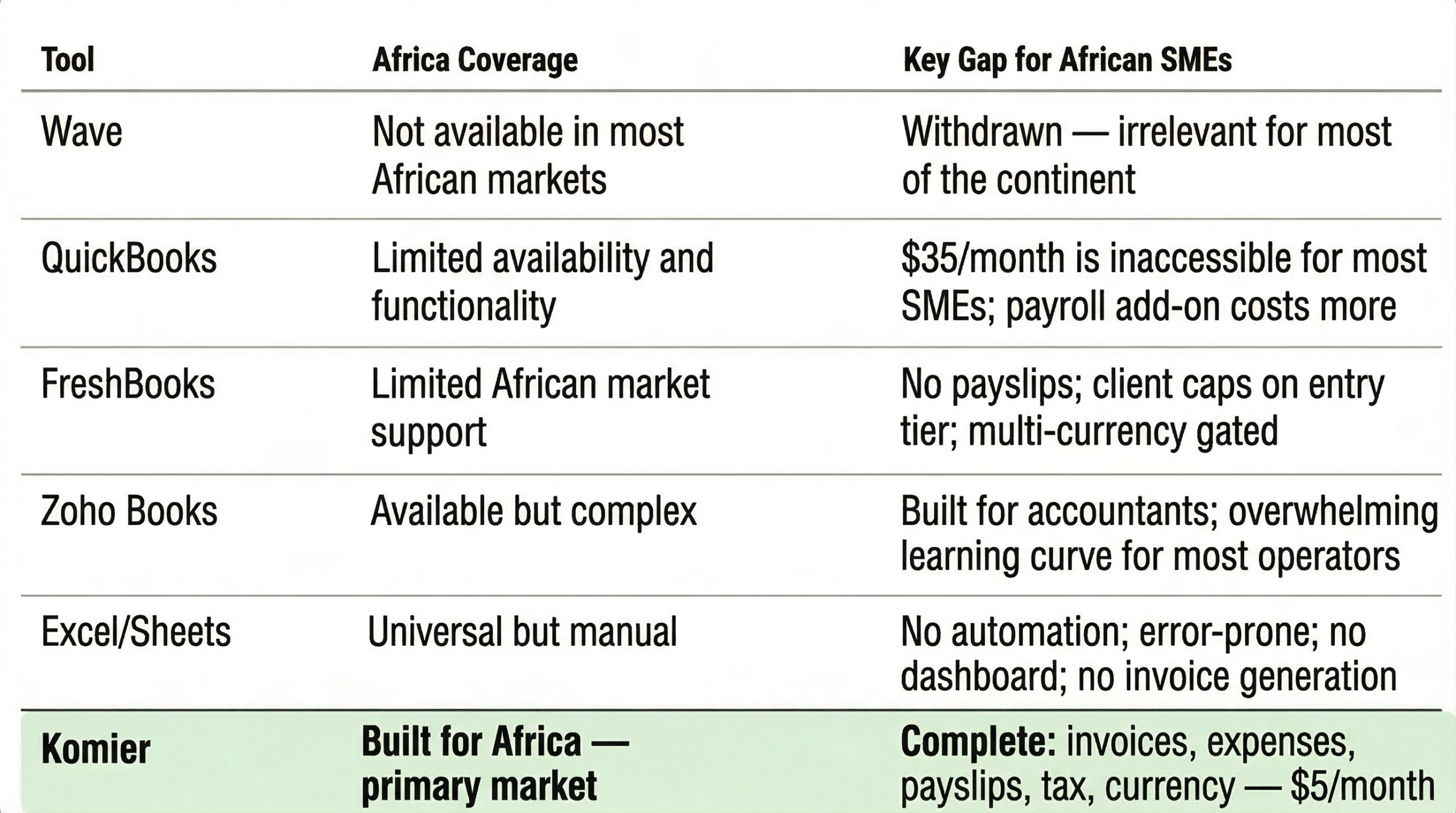
How the Major Tools Fail African SMEs
Why Komier Is Built for This Market
Komier is operated by UdanAI Ltd, incorporated in Mauritius — a jurisdiction at the economic and geographic intersection of Africa and Asia. The platform was built with African and Indian markets as the primary audience, not as an afterthought or an international expansion.
Employment flexibility: Payslip generator with overtime per hour and per day — built for mixed employment structures
Tax configurability: Configurable tax rates for VAT, PAYE, and any other applicable deduction — no hardcoded Western tax logic
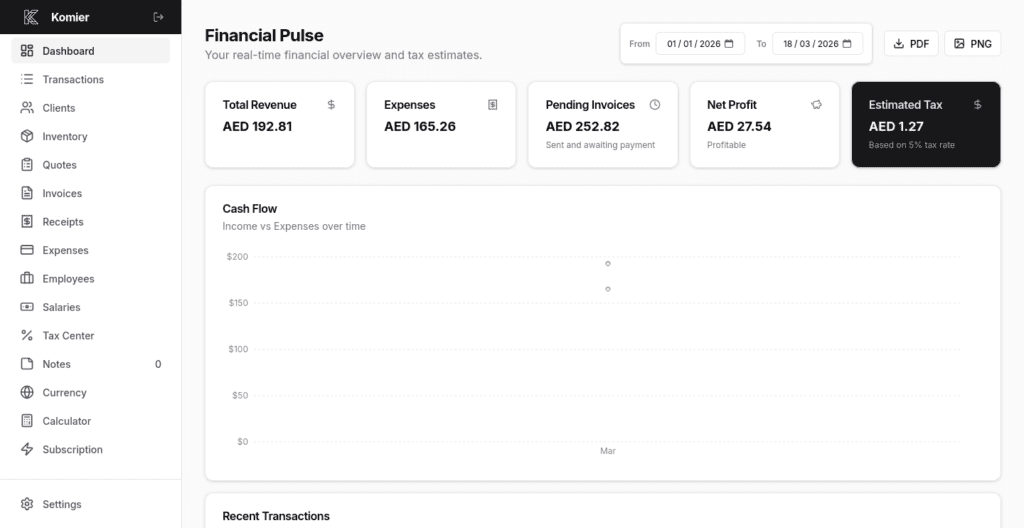
Multi-currency: Multi-currency invoicing with live exchange rates on all plans — not a premium feature
Accessibility: $5/month pricing that reflects the purchasing power reality of growing African markets
Mobile-first: Fully mobile-responsive — works on any device, anywhere