Komier vs Zoho Books: When Powerful Becomes Too Much — The Case for Simplicity
Zoho Books is a genuinely powerful accounting platform. It handles multi-currency, GST, VAT, payroll, inventory, project accounting, bank feeds, and more. It is also, by almost universal agreement among its users, overwhelming for the majority of solopreneurs and SMEs who try to use it.
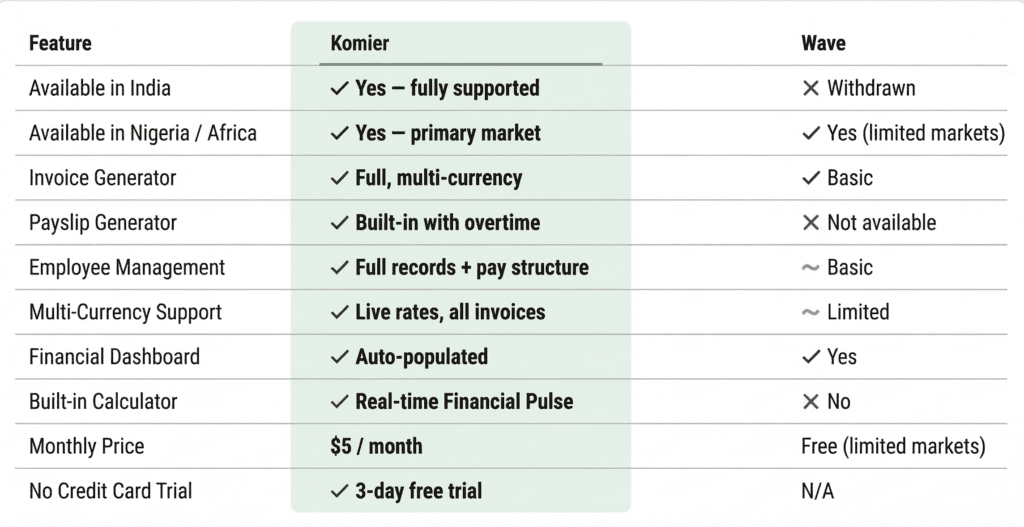
Zoho Books became the default recommendation when Wave withdrew from India and several African markets — not because it is the right tool for those users, but because it was available and technically capable. Being technically capable is not the same as being the right fit.
The Zoho Books Learning Curve Problem
Zoho Books is built with accountants and finance teams in mind. Its terminology, its workflow, its module structure — all of it assumes a level of accounting knowledge that most independent entrepreneurs do not have and do not need. Common user experiences with Zoho Books include:
Spending hours in the setup process before generating a single invoice
Struggling to find basic functions like expense logging buried in complex navigation
Being confronted with accounting concepts — chart of accounts, journal entries, debit and credit entries — that are irrelevant to day-to-day small business operation
Paying for modules and features that are never used because the core workflow is already complicated enough
None of this is a criticism of Zoho Books as a product. It does what it claims to do, and it does it well. But for a solopreneur or five-person SME that needs to create quotes, invoice clients, track expenses, and generate payslips, it is the wrong level of tool — like using a commercial kitchen to make breakfast.
Zoho Books can do almost everything. The problem is that 'almost everything' takes considerable time and expertise to set up — time most small business owners simply do not have.
Feature Comparison
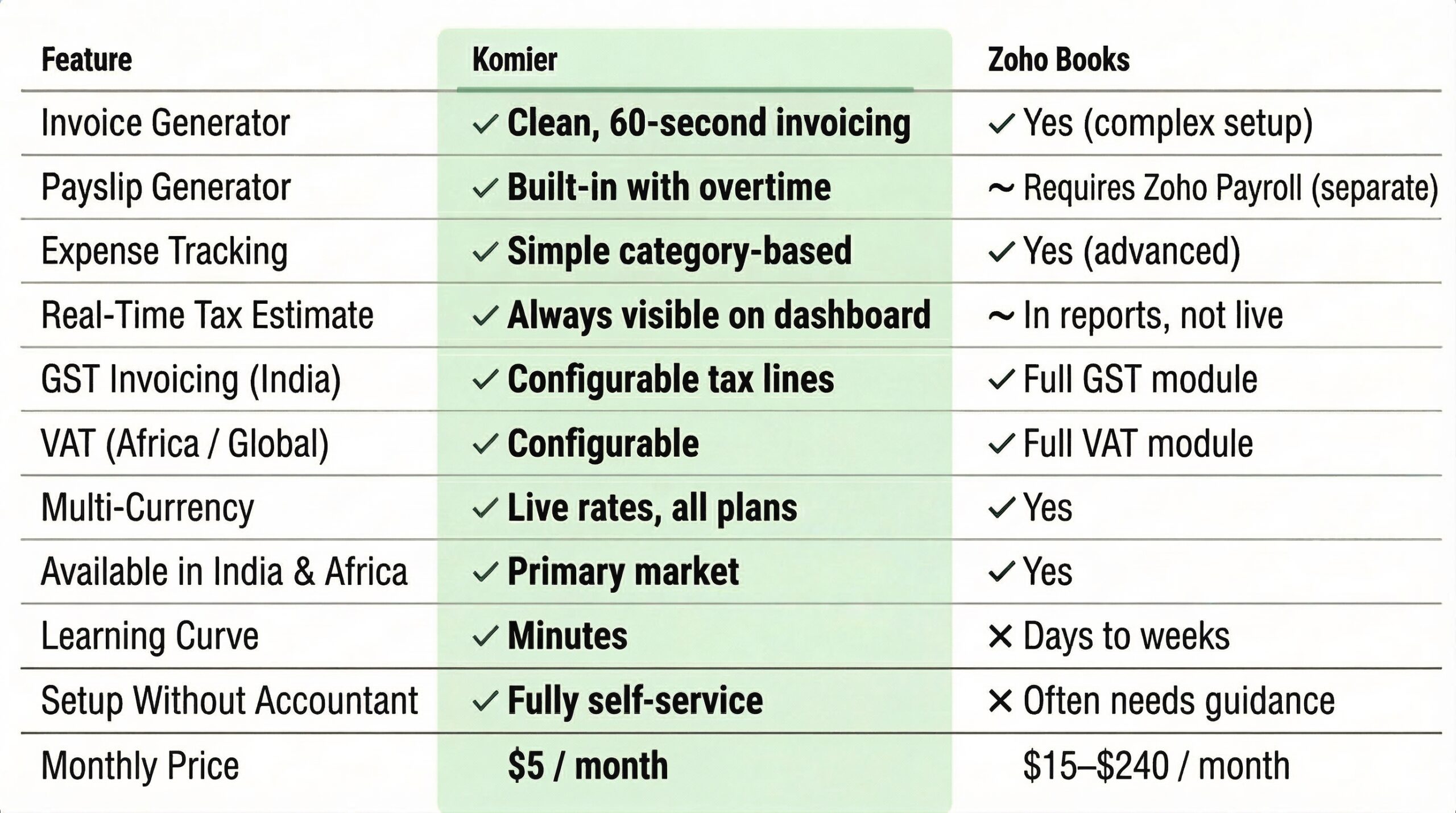
The Zoho Ecosystem Trap
Zoho is not just Zoho Books — it is an entire suite of business applications: Zoho CRM, Zoho Payroll, Zoho Projects, Zoho Inventory, Zoho Mail, and dozens more. The individual products integrate with each other, which is genuinely useful for larger organisations that need a unified business platform.
For a solopreneur or small SME, this ecosystem becomes a trap. You sign up for Zoho Books, discover that payroll requires Zoho Payroll, which is a separate subscription. Inventory management is another module. Project tracking another. The modular pricing model that suits enterprises means small businesses end up paying for multiple Zoho products to replicate what should be a single simple tool.
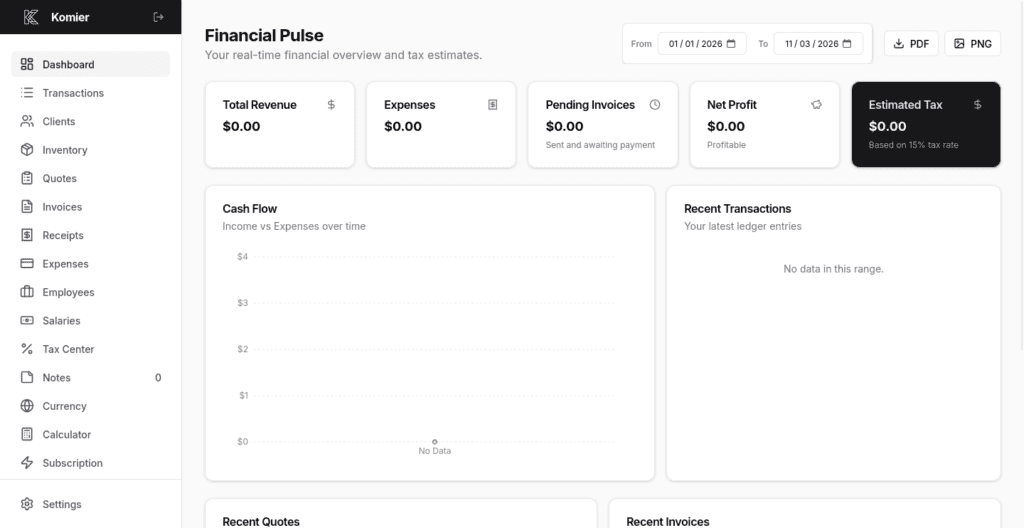
Komier is one product. One price. Everything you need for financial management without a product ecosystem to navigate.
Where Zoho Books Is Genuinely Better
Zoho Books is the superior tool in specific situations:
Businesses with dedicated finance staff who have accounting training and will use the advanced features
Companies that need deep GST or VAT compliance modules with automated filing preparation
Organisations already running on the Zoho ecosystem for CRM, projects, and operations
Businesses requiring automated bank reconciliation across multiple accounts
If your business fits any of these profiles, Zoho Books is a serious tool worth the complexity. If it does not, Komier gives you the financial clarity you need without the overhead.