The Best Financial Tool for European Freelancers and SMEs — VAT-Ready, Multi-Currency, and Simpler Than You Think
Europe’s freelance and SME market is enormous and diverse — over twenty million self-employed workers across the EU, with distinct tax environments in each country. German freelancers navigate Umsatzsteuer. French auto-entrepreneurs manage TVA. Dutch ZZP’ers deal with BTW. Polish freelancers invoice in PLN and EUR. Spanish autónomos manage IVA. The common thread across all of them: VAT compliance on invoices, multi-currency reality for anyone with international clients, and a need for financial tools that do not cost more than a week’s groceries every month.
The European Multi-Currency Reality
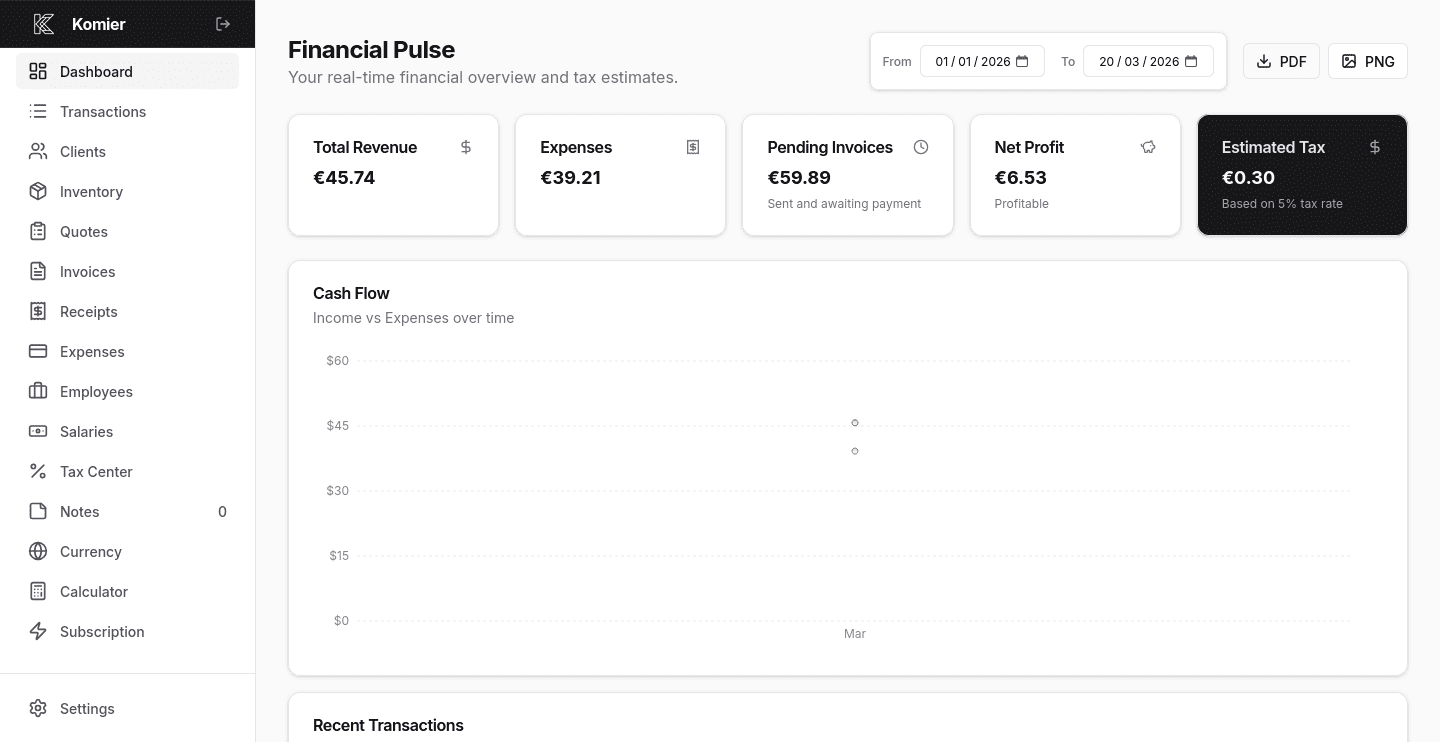
Not all EU countries use the Euro. Poland uses PLN, Hungary uses HUF, Sweden uses SEK, Denmark uses DKK, and Romania uses RON. Freelancers in these countries routinely invoice clients in EUR while managing local currency expenses. Komier’s live currency exchange covers all European currencies with real-time rates.
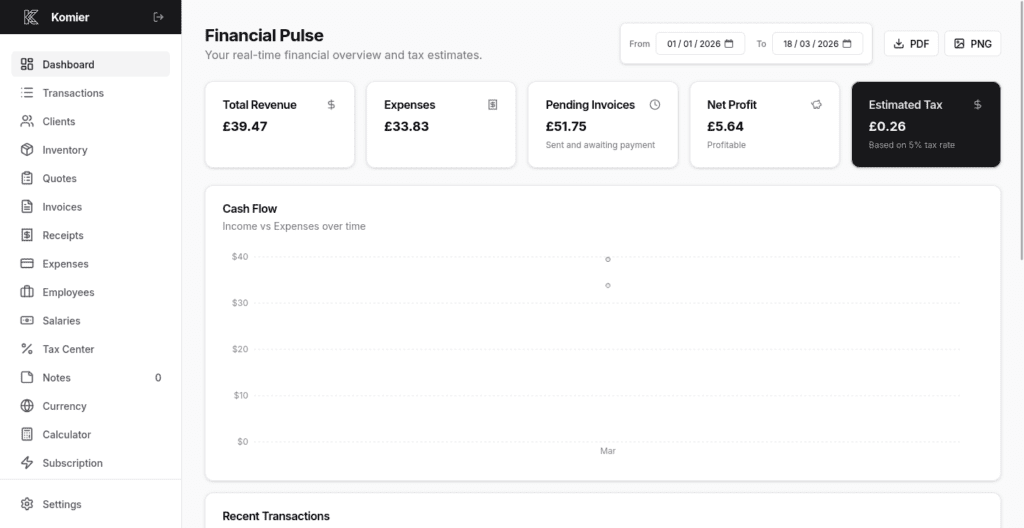
For UK-based freelancers operating in GBP post-Brexit, invoicing EU clients in EUR is now a multi-currency operation that Komier handles natively — generate EUR invoices for EU clients, GBP invoices for UK clients, from the same account.
Germany — Kleinunternehmer and Standard VAT
German freelancers (Freiberufler) and small business owners (Kleinunternehmer) below the VAT threshold of 22,000 EUR turnover are exempt from charging VAT. Above this threshold, standard MwSt at 19% applies. Komier supports both scenarios: configure your tax rate at 0% for Kleinunternehmer invoices with a note, or at 19% for standard VAT-registered invoices.
France — Auto-Entrepreneur and TVA
French auto-entrepreneurs enjoy a simplified tax regime with VAT exemption below certain turnover thresholds. Above the threshold, TVA at 20% applies for most services. Komier supports both configurations, allowing French freelancers to transition from TVA-exempt to TVA-registered invoicing by simply updating their tax rate setting.
The EU Reverse Charge Mechanism
For B2B cross-border services within the EU, the reverse charge mechanism often applies — meaning no VAT is charged on the invoice and the recipient accounts for VAT in their country. In Komier, you can create reverse-charge invoices by setting the tax rate to 0% and adding a note field stating the reverse charge applies and citing the applicable EU directive. This is standard practice for EU cross-border freelance services.
Mobile-first usage
Many African entrepreneurs manage their businesses primarily from mobile devices. A financial tool that is not fully mobile-responsive is not built for this market — it is built for a desktop user in a suburban office, which describes a minority of the actual user base.
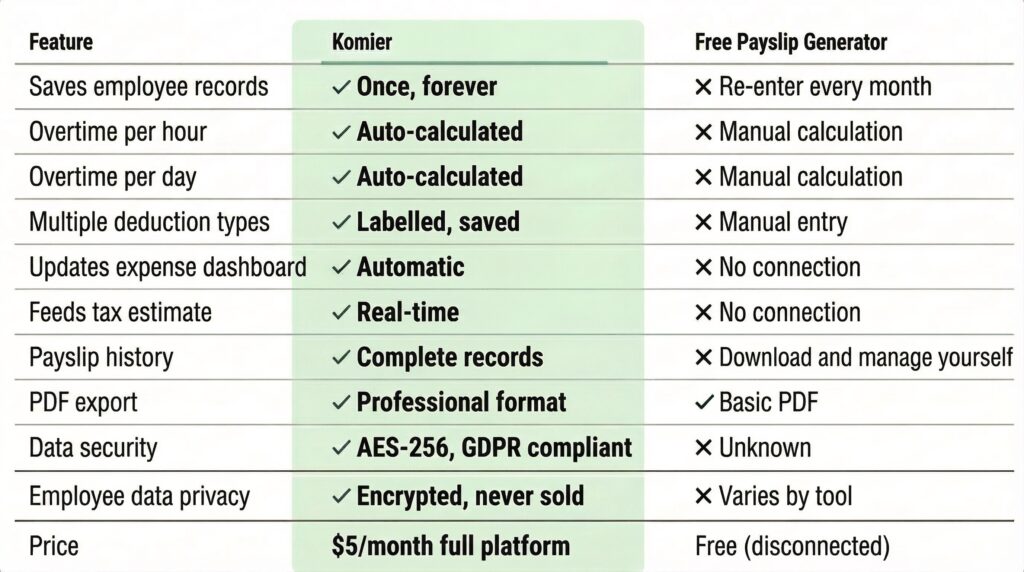
Komier is GDPR-compliant by design — relevant for European users who need confidence that their financial tool handles personal and business data in accordance with EU data protection law. Your data is encrypted at rest and in transit, never sold, and permanently deleted upon account closure. Full details are in our Privacy Policy at komier.app.
VAT Across Europe — Configured, Not Hardcoded
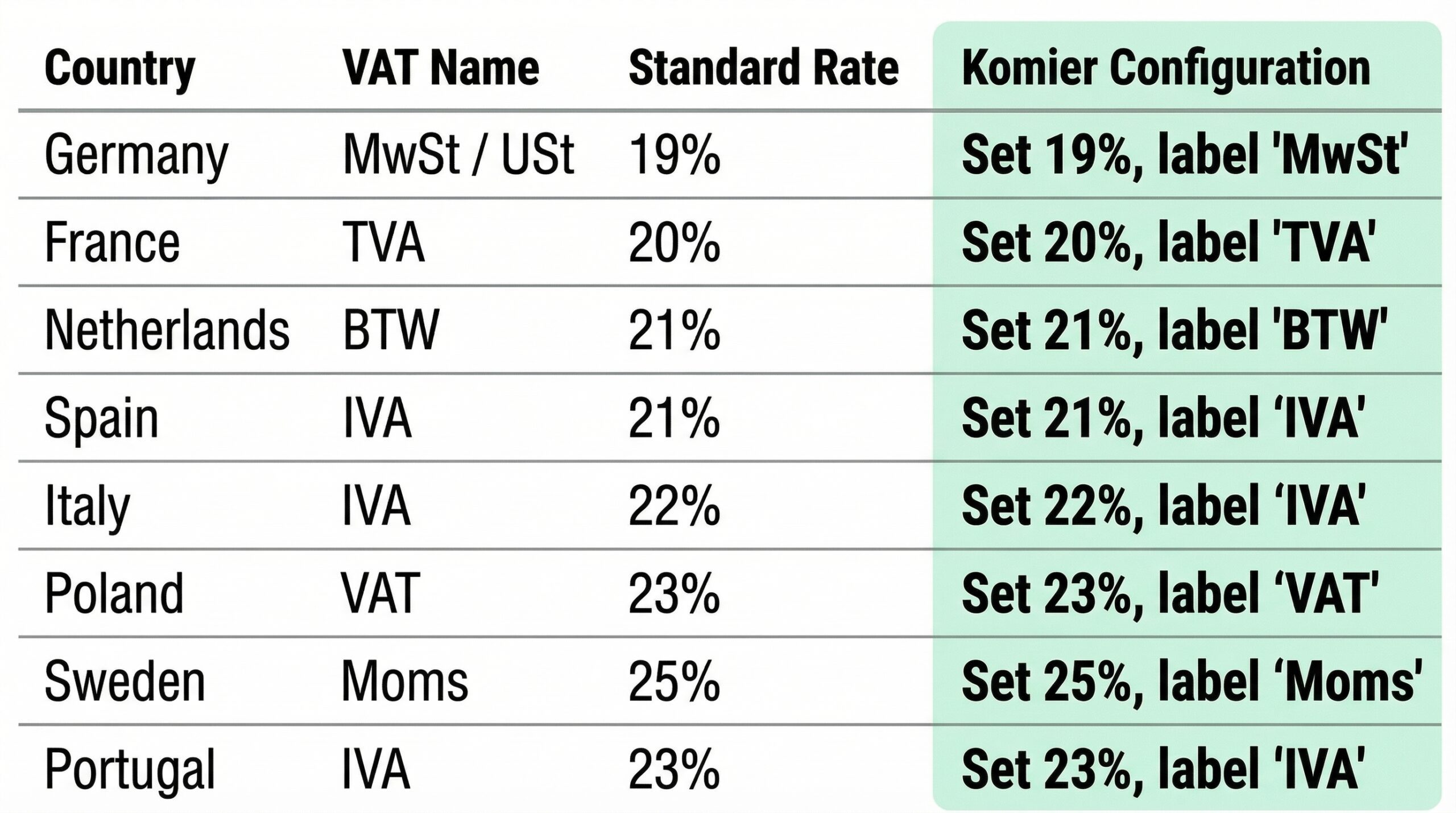
Komier takes a deliberate approach to tax: we do not hardcode country-specific tax logic. Instead, we give you a configurable tax rate and label — you enter your applicable rate and name it as your jurisdiction requires. This makes Komier immediately functional across all European markets without needing country-by-country tax engine updates.
Setting Up Komier for Europe — Quick Start
Set home currency to your local currency (EUR, GBP, PLN, SEK, etc.) in Settings
Add your VAT registration number to Business Profile
Configure your national VAT rate and local label (TVA, BTW, MwSt, IVA, Moms) in Tax Settings
For cross-border B2B invoices: set 0% tax with a reverse charge note